South American Mountain Passes
Crossing international frontiers along the Andean spine of South America entails extreme altitudes, sub-zero nighttime temperatures, and relentless winds. From northern Chile across into Bolivia and Argentina, travelers face severe environmental demands that test clothing, electronics, and physical endurance.
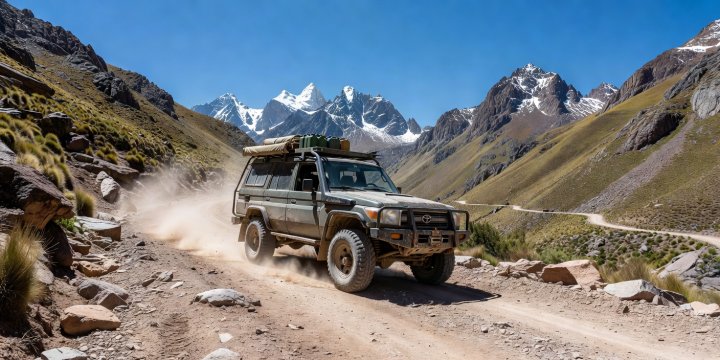
Paso de Jama: Chile to Argentina (4,200m)
The transit between San Pedro de Atacama and San Salvador de Jujuy traverses the altiplano, peaking at nearly 4,400 meters. International bus operators (such as Andesmar or Pullman Bus) make this 10-hour voyage 3 to 4 times per week. Because Chilean and Argentine customs share a single joint facility at Jama, passengers must endure hours standing in cold cinderblock inspection halls.
Argentine agricultural inspectors (SENASA) strictly enforce prohibitions on fresh fruit, raw honey, seeds, and unpasteurized cheeses. Declare all biological goods immediately to prevent fines.
The Salar de Uyuni to San Pedro 4WD Expedition Passage
The iconic 3-day overland crossing between Uyuni (Bolivia) and San Pedro (Chile) via Laguna Colorada and Laguna Verde reaches 4,800 meters at the Sol de Mañana geyser basin. The Bolivian exit post at Hito Cajón is a solitary stone shack where passports are manually logged into paper ledgers.
| Pass Name | Borders Connected | Peak Altitude | Seasonal Closures | Road Surface |
|---|---|---|---|---|
| Paso de Jama | Chile ↔ Argentina | 4,200m | Winter snowstorms (June–Aug) | Paved asphalt |
| Hito Cajón | Bolivia ↔ Chile | 4,480m | Ice storms & flash flooding | Unpaved sand and washboard gravel |
| Paso Los Libertadores | Chile ↔ Argentina | 3,200m | Frequent winter avalanches | Paved (Heavy truck corridor) |
| Desaguadero | Peru ↔ Bolivia | 3,812m | Year-round open; civil protest strikes | Paved lakeside urban bridge |
High-Altitude Equipment Field Testing
Operating laptops, lithium battery banks, and cold-weather clothing during alpine overland journeys requires deliberate gear selection.
Merino Wool 200gsm vs. Synthetic Grid Fleece
In unheated Bolivian desert refugios where temperatures drop to -15°C, moisture management is critical. 100% merino base layers resist bacterial odor over multi-day dirt roads, while a lightweight 100g synthetic breathable mid-layer retains warmth even during rapid altitude changes.
Lithium-Ion Voltage Degradation in Altiplano Cold
Lithium chemistry suffers acute capacity drops below freezing. Keep smartphone handsets, camera batteries, and USB powerbanks inside internal zippered jacket pockets close to body heat. Never charge cold lithium cells directly; allow batteries to reach ambient room temperature before plugging into high-wattage chargers.
Acetazolamide (Diamox) & Hydration Protocols
Ascending directly from Calama (2,260m) to Jama (4,200m) can trigger Acute Mountain Sickness (AMS). Acclimatize in San Pedro for at least 48 hours prior to the pass. Maintain daily fluid intake of 3 to 4 liters, minimize alcohol consumption, and consult a physician regarding preventative acetazolamide usage.